Top 10 Tips To Determine The Frequency Of PAT Testing in East Midlands
The UK's health and safety laws make it difficult for duty holders to determine the right frequency of Portable Appliance Testing. Contrary to widespread misconception, there is no mandated statutory interval–such as an annual requirement–specified in the Electricity at Work Regulations 1989. Instead, Regulation 4(2) imposes a general duty to maintain electrical systems to prevent danger, placing the legal onus on the employer or responsible person to establish a suitable maintenance regime through a structured risk assessment. Health and Safety Executive (HSE) strongly supports this risk based approach. This method moves away form blanket testing and requires that all intervals for inspection and testing be justified. It is important to determine the frequency by evaluating equipment type, operating environment, users and previous history. This makes PAT scheduling more dynamic than a calendar-based, passive compliance exercise.
1. The Absolute Primacy of Risk Assessment
The frequency of tests is not prescribed in law, but it must be determined by a risk assessment that has been conducted by the dutyholder. This assessment is the foundational document that justifies your entire PAT testing regime. This assessment must take into account all the factors that can cause an appliance become dangerous, and determine how often they should be tested and/or inspected to reduce that risk. HSE inspectors will look for this assessment, and they will compare it to the conclusions. It is essential to any testing schedule. Without it, the schedule will be arbitrary and non-compliant.
2. Key Factors Influencing Testing Intervals
The risk assessment must systematically evaluate several core factors to determine a defensible frequency. These include: Equipment Type: Class I appliances (e.g., kettles, toasters, power tools) require more frequent testing than Class II (double-insulated) appliances due to their earth reliance. A harsh environment, such as a commercial kitchen, construction site, or workshop, requires far more frequent inspections than a calm office. Users: The equipment used by trained staff may not require as many formal tests as that used by the general public or by untrained employees. Equipment Construction: A robust appliance may pose a lower risk than one with a flexible, easily damaged cable. Previous History: Appliances that have a history of faults require more frequent maintenance.
3. Formal visual inspections are critical to the success of any project
Formal visual checks are part of a maintenance regime that is legally valid and often more important than combining inspections and tests. They can detect the majority of faults such as cable damage and loose plugs. For many low-risk appliances in low-risk environments (e.g., a desktop computer in an office), a formal visual inspection by a competent person may be all that is required, with no need for routine electronic testing. Risk assessments also determine how often these formal visual tests are performed.
4. Checking the User and First Line Maintenance
The first line of defense is the user check. Dutyholders must encourage users to conduct a pre-use visual inspection for obvious signs of damage such as frayed cable, burn marks or loose parts. While not recorded as part of the formal PAT system, promoting a culture of user awareness is a key part of a holistic risk-based approach and can help identify problems between scheduled formal inspections.
5. Code of Practice for IET: Guidance
The IET Code of Practice, while not a law, provides valuable advice on the recommended frequencies for initial equipment. It provides a table that suggests intervals for equipment in different environments (e.g. industrial, commercial and public). Dutyholders can use this table as a robust starting point for their risk assessment. For example, it might suggest 3-monthly visual inspections for equipment on a construction site but 24-monthly intervals for IT equipment in an office. These are only initial recommendations that will be modified based on real-world experience.
6. The concept of "Result Based Frequency Schedules"
For a truly sophisticated approach that is compliant, it's important to adjust the frequency of future tests based on results from previous tests. If an appliance, or a category of appliances, consistently passes its tests without fault over several years, the risk assessment can be reviewed to justify extending the testing interval. In contrast, if an appliance type is prone to failure, the interval can be shortened. The enforcement authorities are very supportive of this dynamic and evidence-based approach.
7. New Appliances & Equipment
The common belief is that testing new equipment is not necessary. While it may not need a formal combined test before first use, a formal visual inspection is still required to check for transit damage, correct wiring of the plug, and suitability for the UK market (e.g., a correctly fused plug). The risk analysis will determine when to test new equipment. It will be integrated into the maintenance schedule.
8. Hired or Borrowed Gear
PAT must be used for equipment that is brought on site, like hired tools or contractors' equipment. The dutyholder has a responsibility to ensure it is safe before use. Risk assessments for this equipment are often conservative and require a combined inspection/test immediately prior to its first use.
9. Documenting the Reasons for Frequency Selection
Compliance is demonstrated through documentation. The risk assessment must not only state the chosen frequency for each type of appliance but must also record the rationale behind that decision. This document is the evidence of "due diligence." It should mention the factors taken into consideration (environment, users, equipment types) and, when applicable, refer to IET Code of Practices or the results of past testing history in order to justify intervals.
10. Regular Review of Intervals and Adjustment
The risk assessment and the testing frequencies it dictates are not static documents. Regulation 4 of 1989 Electricity at Work Regulations requires that maintenance be carried out continuously. The dutyholder shall review the testing intervals and risk assessment on a periodic basis (e.g. every year) or in response to any significant change. This ensures that the system remains proportionate and effective. See the recommended East Midlands PAT testing for more tips.
Fire Extinguisher Servicing Top 10 Tips in East Midlands
When choosing a UK provider to service your fire extinguishers, it is important to should be looking for more than a company who can do a basic annual inspection. Comprehensive providers serve as a single-point of contact for managing your entire inventory of fire safety equipment. They provide an integrated range services that reduce administrative burden and provide the complete solution. The range of services provided is an indication of the expertise, experience, and commitment to be an ongoing business partner rather than a simple contractor. It is possible to make educated choices by knowing the various services that are available. These include initial risk assessments and installations, regular maintenance and emergency support and ending-of-life disposal.
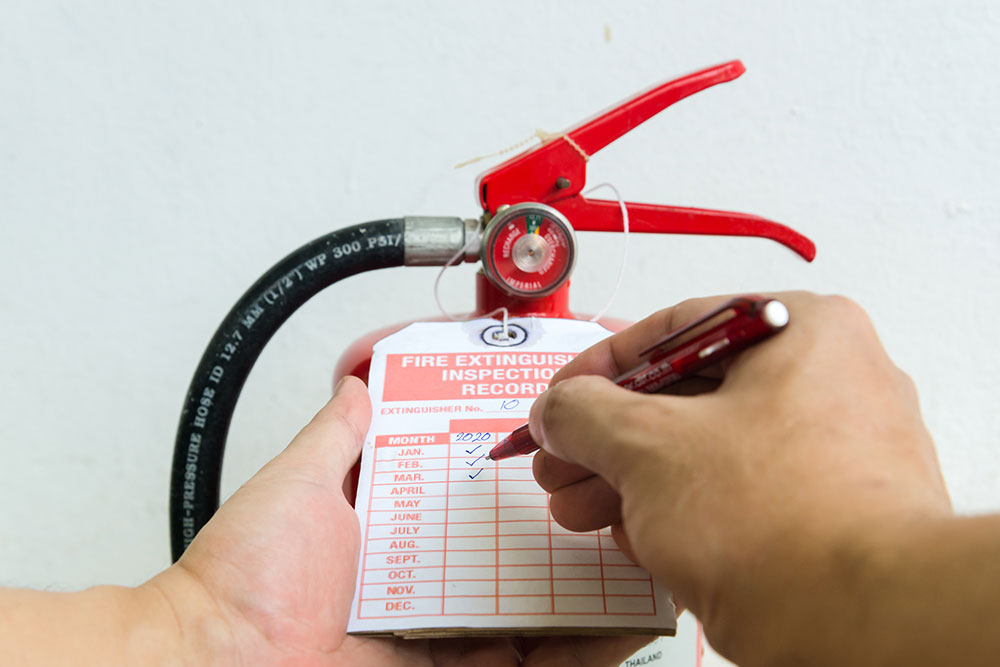
1. This service is subject to BS 536-3. A full-service provider will manage the entire schedule of time such as monthly visual inspections (often using your direction) as well as the obligatory annual service for all extinguishers for fire. The extended service (discharge testing) for foam, water or powder models is every five years. The pressure and overhaul tests for CO2 extinguishers after 10 years. It is recommended that they schedule these inspections in advance, and offer full accreditation.
2. Installation and supply of new equipment A reliable service provider does not just provide maintenance, but also supply and recommend the right equipment. This is a service that includes an inspection of the site to determine the correct type, size, rating, and quantity of extinguishers required in light of your fire risk assessment and the specifics of your premises' dangers (e.g. the Class A, B C F, electrical). They'll supply the BSI Kitemarked or comparable certified equipment and install it in accordance with the standards of BS 5306-8. This will include correct signage, mounting heights, and accessibility.
3. Fire Risk Assessment (FRA): Many leading servicing firms have assessors certified by the ASA who can perform or review your legally required Fire Risk Assessment. The FRA must be an independent process. Having your extinguisher vendor participate in it or even complete it, however, assures that the process is completely synchronized with the provision of equipment and the identified hazards. It creates an audit trail that is continuous, starting with hazard identification and ending with control measures implementation.
4. Emergency Call-Outs and Reactive Services: Equipment can become damaged, stolen or even discharged accidentally at any moment. Reputable companies offer an emergency callout service that can quickly replace or restore your equipment. It ensures that your facility are never left unprotected or non-compliant for any longer than necessary. This includes replacing damaged or missing equipment.
5. Other fire safety equipment that is serviced: Your strategy to protect yourself from fire extends beyond portable extinguishers. A full-service provider will be capable of maintaining and certifying the rest of your equipment. It is possible to create a single contract that is easy to administer. Hose reels, fire blankets, fire alarms systems, emergency lighting and dry/wet stair risers are all included. This approach is consolidated to ensure consistency, simplifies paperwork, and is often cost-effective.
6. Training and Education Service: Equipment can only be effective if users know how to use them. Numerous providers also provide complementary services such as extinguisher (often using live-fire simulations) as well as training for fire marshals. This empowers your employees and improves overall safety.
7. Online portals and comprehensive documentation are mandatory. Today, the leading firms are offering sophisticated documentation – not just certificates printed on paper. They also provide detailed digital reports, asset registries, and online portals for customers to get access to their complete service history. Customers are able to download certificates, report problems, and book appointments at any time.
8. Disposal Services and Environmental Services – As per Duty of Care regulations, responsible disposal of extinguishers decommissioned constitutes a legal and environmental obligation. A full service provider will manage this efficiently. They employ licensed waste carriers to dispose of the extinguishers and also provide Waste Transfer Notes that prove legal and safe disposal. Avoid paying high fines for improper disposal pressurised vessels or hazardous materials.
9. Planned Preventative Management (PPM) and Asset Management. The best providers go beyond reactive calls and offer proactive contracts for PPM. They manage your complete asset portfolio, including monitoring due dates for services for different types of equipment, and then automatically scheduling visits. It takes away the burden of administrative tasks and can rest certain that you won't be late for a scheduled service.
10. Consultancy Services and Compliance Auditing Experts offer consultation services to larger or more complicated sites. This could include performing an assessment of your current fire protection measures compared to the legal standards. It could also involve advising you on remedial plans and ensuring ongoing auditing of compliance. Follow the recommended East Midlands fire protection for site recommendations.